Death
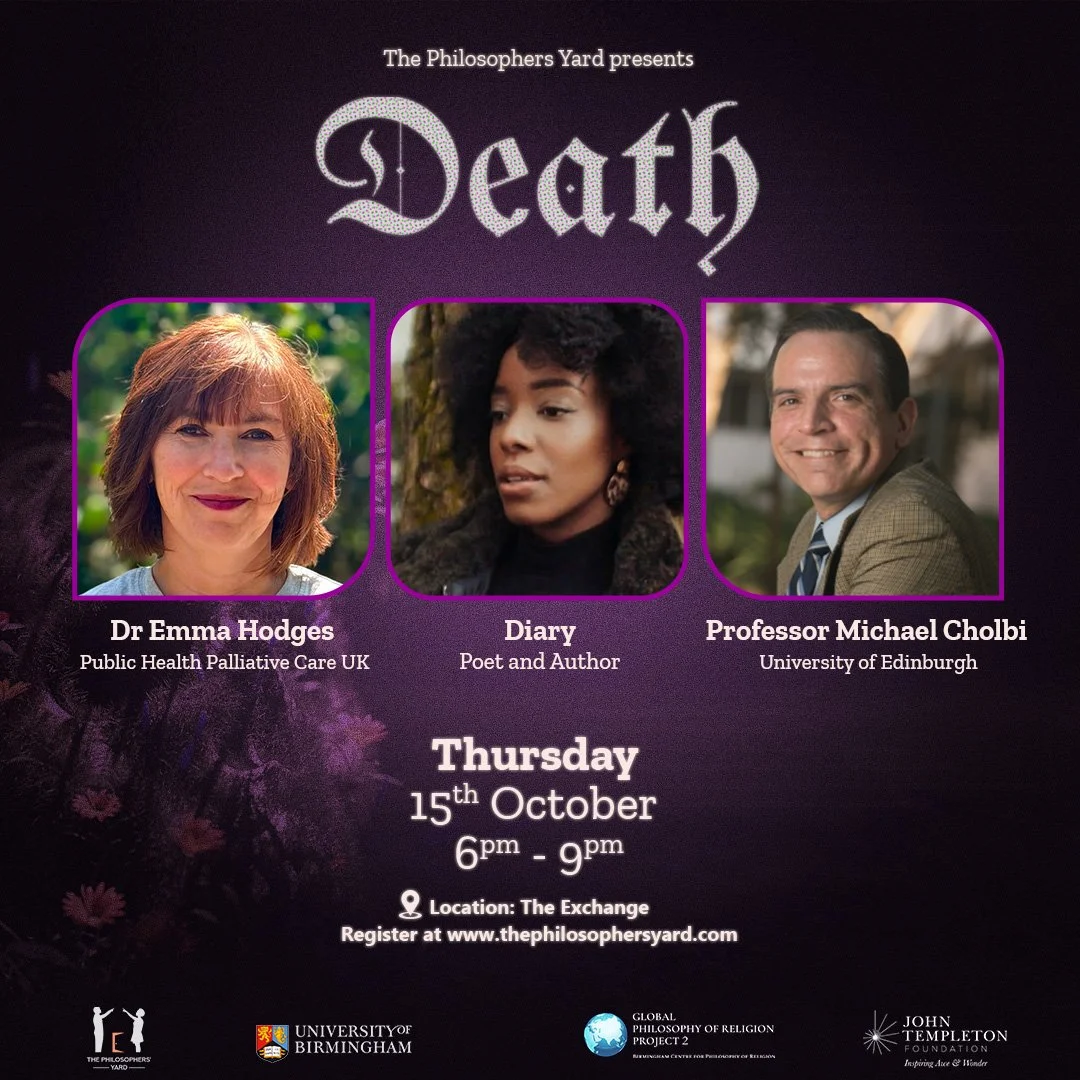
What emotions does death evoke in you? Fear, gratitude, anger - or something else entirely?
What does it mean to die well? And why is death still one of the hardest subjects for us to talk about?
In this main event, The Philosophers’ Yard and the Global Philosophy of Religion Project at the University of Birmingham explored one of life’s most universal and most profound questions. The evening featured two thought-provoking talks, live poetry from Wolverhampton-based poet Diary, and opportunities to explore and discuss the ideas raised with other attendees.
Should We Fear Death?
Michael Cholbi, Professor and Personal Chair in Philosophy at the University of Edinburgh and the founder of the International Association for the Philosophy of Death and Dying (www.philosophyofdeath.org)
Philosophers have long been preoccupied with the nature, significance, and morality of death. This talk asked what emotions our own death should evoke in us. Fear is perhaps the emotion we most commonly associate with death, but making rational sense of this fear proves surprisingly difficult. Either death isn’t harmful to us at all and therefore doesn’t justify fear, or it can be harmful to us but not in ways that justify fearing it. Michael explored other possible responses to our mortality, including anger, disappointment and gratitude.
Why Don’t We Talk About Death?
Dr Emma Hodges, Founder of Public Health Palliative Care UK and Chief Executive at the The Lisieux Trust in Birmingham; former Development Director for Compassionate Communities UK and a Hospice Chief Executive
Death remains one of society’s last taboos but what does our reluctance to talk about it cost us? Emma’s talk explored the idea of social morbidity: the ways in which death, dying, loss and caregiving can affect wider society, contributing to challenges including loneliness, depression, economic inactivity, educational absence and addiction. She considered how talking more openly about death might help us build healthier, more compassionate communities.
After the talks, attendees had the opportunity to continue the conversation in small-group breakout sessions. We explored different ways of responding to death and mortality, as well as sharing cultural traditions, beliefs and experiences around death, dying, loss and caregiving.